
Why Adaptability Is The Most Important Skill For Entrepreneurs In A Changing Market
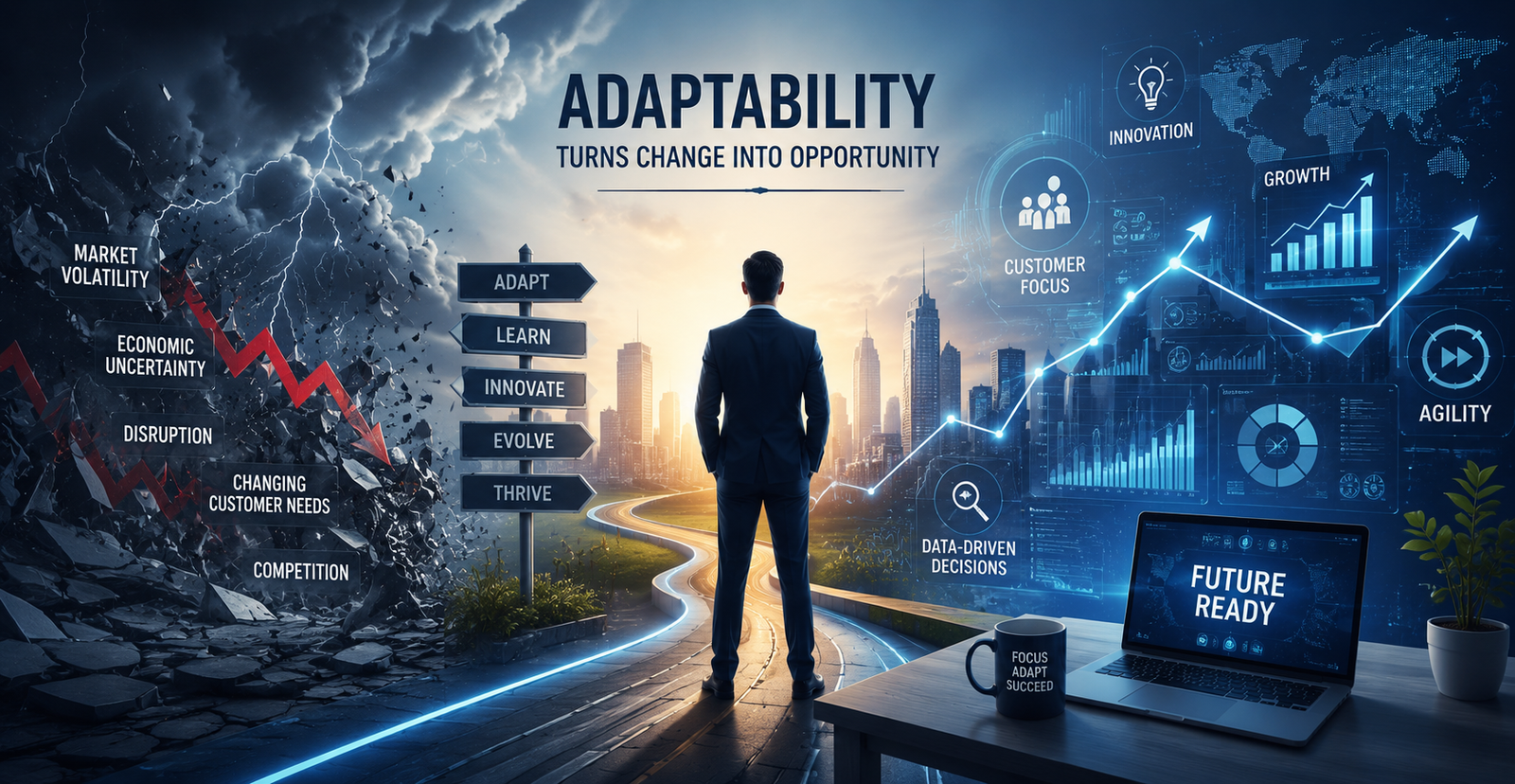
Markets today do not move in straight lines. They shift, evolve, and often surprise even the most experienced business minds. For entrepreneurs, this constant state of change is not an occasional challenge but a permanent reality. New technologies emerge, consumer preferences evolve, competition intensifies, and economic conditions fluctuate. In such an environment, one skill consistently stands out as the difference between businesses that survive and those that thrive: adaptability.
At a basic level, adaptability is the ability to adjust to new conditions. In entrepreneurship, however, it goes far beyond simple adjustment. It is about staying relevant, making informed decisions in uncertainty, and turning unexpected situations into opportunities for growth. It is not a reactive trait alone but a proactive mindset that prepares businesses to navigate change with confidence.
One of the primary reasons adaptability holds such importance is the pace at which markets are transforming. What worked even a few years ago may no longer be effective today. Business models are being redefined, industries are being disrupted, and customer expectations are continuously rising. Entrepreneurs who rely solely on past success often find themselves struggling to keep up. Adaptable entrepreneurs, on the other hand, stay alert to these shifts. They observe trends, question assumptions, and are willing to rethink their strategies when necessary.
A key aspect of adaptability is openness to learning. Entrepreneurs operate in environments where there is no fixed playbook. Every decision brings a new lesson. Those who are adaptable treat each experience, whether successful or not, as a source of insight. They are willing to learn new skills, understand new technologies, and explore unfamiliar markets. This willingness to learn ensures that they are not left behind as industries evolve.
Closely connected to learning is the ability to respond to failure constructively. In a changing market, not every decision will lead to the desired outcome. Some strategies will fail, and some ideas will not work as expected. For an entrepreneur, failure is not an endpoint but a feedback mechanism. Adaptable individuals analyse what went wrong, make necessary adjustments, and move forward with greater clarity. This resilience allows them to recover faster and make better decisions in the future.
Adaptability also plays a critical role in understanding and responding to customer needs. Today’s consumers are more informed and more demanding than ever before. Their preferences can shift quickly, influenced by trends, technology, and social factors. Entrepreneurs who are adaptable pay close attention to these changes. They listen to feedback, observe behaviour, and refine their offerings accordingly. This customer-centric approach not only improves satisfaction but also builds long-term trust and loyalty.
Another important dimension is decision-making under uncertainty. Entrepreneurs rarely have access to complete information. Markets change rapidly, and waiting for perfect clarity is often not an option. Adaptability enables entrepreneurs to make informed decisions with limited data while remaining flexible enough to adjust their course if needed. It encourages a balance between confidence and caution, allowing businesses to move forward without becoming rigid.
Team dynamics also benefit significantly from adaptability. As a business grows, the entrepreneur’s role shifts from individual contributor to leader. An adaptable entrepreneur fosters a culture where change is accepted rather than resisted. Teams are encouraged to experiment, share ideas, and embrace new ways of working. This creates an environment where innovation can flourish, and employees feel empowered to contribute meaningfully.
Technology further highlights the need for adaptability. Digital transformation has reshaped almost every industry, from retail and finance to healthcare and education. Entrepreneurs who are adaptable are quicker to recognise the potential of new tools and platforms. They are willing to integrate technology into their operations, improve efficiency, and enhance customer experiences. Those who resist change often find themselves at a disadvantage.
It is also important to recognise that adaptability does not mean constant change without direction. It is not about chasing every new trend or abandoning strategy at the first sign of difficulty. True adaptability is grounded in clarity of purpose. Entrepreneurs must have a clear vision of what they want to achieve, while remaining flexible in how they achieve it. This balance ensures that change becomes a tool for progress rather than a source of confusion.
For young entrepreneurs and startup founders, building adaptability requires conscious effort. It begins with cultivating the right mindset. Being open to new ideas, seeking diverse perspectives, and staying curious are simple yet powerful habits. Regular reflection also plays a role. Taking time to assess what is working and what is not helps in making timely adjustments.
Practical steps can further strengthen this skill. Entrepreneurs can stay informed about industry trends, invest in continuous learning, and build networks that expose them to different viewpoints. Delegating responsibilities and trusting team members can also enhance adaptability by bringing in fresh ideas and reducing dependency on a single perspective.
In a world where change is the only constant, adaptability becomes more than just a useful trait. It becomes a core capability that defines long-term success. Businesses that adapt are better positioned to navigate uncertainty, seize opportunities, and build lasting value.
Entrepreneurship is a journey filled with unpredictability. While planning and strategy remain important, the ability to adjust and evolve often determines the outcome. Adaptability, therefore, is not just a skill to develop but a mindset to embrace. It allows entrepreneurs to move forward with resilience, clarity, and a readiness to face whatever the market brings next.