
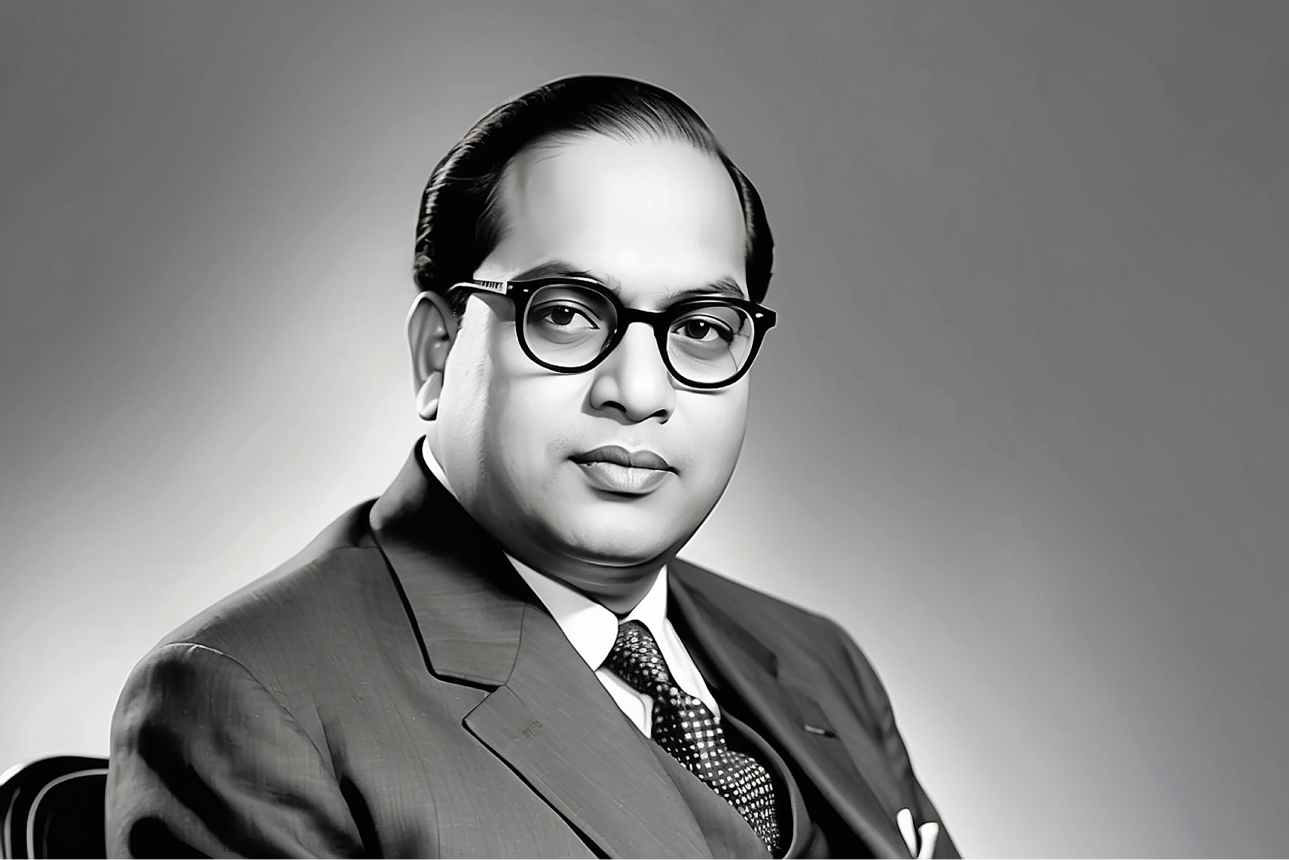
Shaping A Nation: The Economic Genius Of Dr. Ambedkar
Every year, as India observes Ambedkar Jayanti, we rightly celebrate Dr. Babasaheb . Ambedkar as the principal architect of the Constitution, a towering figure whose contributions to law, justice, and social reform remain foundational to the nation’s identity; yet, beyond this widely acknowledged legacy lies another equally powerful dimension of his work, one that continues to shape India’s economic backbone even today, but often does not receive the same level of attention in mainstream discourse.
Dr. Ambedkar was among the earliest Indian thinkers to approach economics not merely as an academic discipline but as an instrument of social transformation, grounding his ideas in the lived realities of inequality, exclusion, and systemic imbalance at a time when India’s economic direction was largely dictated by colonial priorities; he envisioned a system that would serve its people with fairness, stability, and dignity, ensuring that economic frameworks were not detached from human consequences but deeply aligned with them. His landmark work, The Problem of the Rupee, stands as a testament to his intellectual depth and policy foresight, as it carefully examined the volatility and structural weaknesses of India’s currency system while offering practical, forward-looking solutions that were both analytically rigorous and socially conscious, ultimately influencing the Hilton Young Commission and contributing significantly to the establishment of the Reserve Bank of India in 1935.
Through this contribution, Dr. Ambedkar emerged as a silent architect of India’s financial stability, demonstrating a nuanced understanding that a central bank was not merely a regulatory authority concerned with interest rates or currency supply, but a vital institution responsible for safeguarding economic balance and protecting the most vulnerable sections of society; for him, monetary policy was inseparable from social justice, and he was among the few thinkers of his time who clearly articulated how inflation operates as a hidden burden on the poor, steadily eroding purchasing power and deepening inequality in ways that are often invisible yet profoundly damaging. This perspective remains highly relevant in today’s economic environment, where rapid growth, technological disruption, and ambitious valuations often dominate conversations, sometimes at the cost of deeper reflection on who truly benefits from such growth.
His economic philosophy, anchored in the principles of stability, transparency, and accountability, offers enduring lessons not only for policymakers but also for entrepreneurs and business leaders navigating complex and competitive markets; these principles underscore the importance of building systems that are resilient rather than reactive, equitable rather than extractive, and sustainable rather than short-lived. For startup founders, this translates into a crucial insight that sustainable success is not built on rapid gains alone but on strong and disciplined foundations, much like a nation relies on robust financial institutions to maintain long-term stability; businesses that prioritize trust, fairness, and consistent value creation are far more likely to endure beyond market cycles and external disruptions.
Equally significant was Dr. Ambedkar’s emphasis on financial inclusion, a concept he treated not as a policy objective but as a moral imperative, firmly believing that the strength of an economy lies not in the concentration of wealth among a few but in the meaningful participation of many; he envisioned an India where access to financial systems, credit, and opportunities was not determined by one’s social or economic background but was available to every citizen as a matter of right. This idea resonates strongly within today’s entrepreneurial ecosystem, where fintech innovations, digital payment platforms, and inclusive business models are expanding access to financial services, often reflecting, knowingly or unknowingly, the very vision he articulated decades ago, reminding us that the true measure of innovation lies not in how disruptive it appears but in how many lives it meaningfully improves.
As India continues to navigate the complexities of an interconnected global economy, Dr. Ambedkar’s insights remain remarkably relevant, particularly his consistent emphasis on the idea that political democracy must be supported by economic justice, without which the promise of equality remains incomplete; his work challenges us to design institutions that serve people rather than systems that people must struggle to fit into, reinforcing the need for policies that are inclusive, transparent, and oriented toward shared progress. His legacy is not confined to history but continues to influence the way we think about growth, governance, and responsibility, offering a powerful blueprint for leadership that is rooted in courage, intellectual rigor, and an unwavering commitment to public welfare.
On this Ambedkar Jayanti, remembering Dr. B. R. Ambedkar is not merely an act of tribute but an opportunity to revisit and realign with a vision that places people at the center of economic progress, urging today’s entrepreneurs, professionals, and policymakers to build systems that are fair, inclusive, and meaningful in their impact; his message remains clear and compelling that economic progress must extend beyond numbers and metrics to create real opportunities and dignity for all, because ultimately, the strength of a nation’s economy is not defined by how fast it grows but by how many it empowers and carries forward on its journey.