
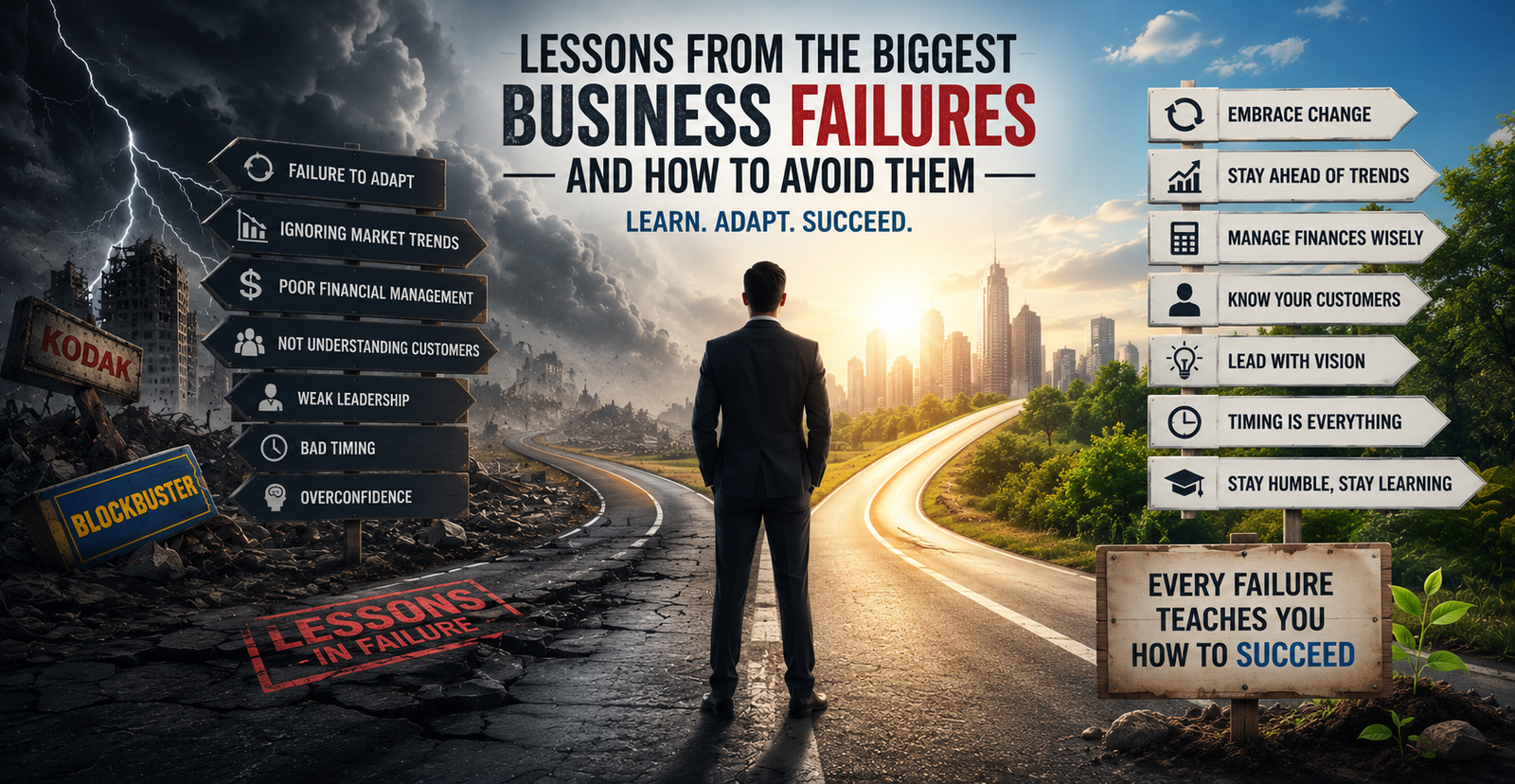
Lessons From The Biggest Business Failures And How To Avoid Them
Failure is often discussed privately, especially in the world of business where success stories dominate headlines. Yet, behind every major breakthrough lies a series of setbacks, misjudgments, and difficult decisions. For entrepreneurs, understanding failure is not about dwelling on mistakes but about learning from them. Some of the most well-known business failures offer valuable insights that can guide young founders and startup leaders toward more thoughtful and resilient decision-making.
One of the most common reasons businesses fail is the inability to adapt to change. A well-known example is Kodak, once a leader in the photography industry. Despite inventing early digital camera technology, the company hesitated to embrace it fully, fearing it would disrupt its existing film business. This reluctance allowed competitors to move ahead, eventually leading to its decline. The lesson here is clear. Markets evolve, and businesses must evolve with them. Entrepreneurs who remain open to change and are willing to pivot when necessary are far more likely to stay relevant.
Another critical lesson comes from Blockbuster, which dominated home entertainment before the rise of streaming services. When presented with the opportunity to acquire Netflix in its early days, Blockbuster declined, underestimating the potential of digital distribution. As consumer behaviour shifted toward convenience and on-demand access, Blockbuster struggled to keep pace. This highlights the importance of recognising emerging trends and acting on them in a timely manner. Entrepreneurs must not only observe change but also respond decisively.
Poor financial management is another factor that has contributed to several business failures. Rapid expansion without a strong financial foundation can create vulnerabilities that are difficult to recover from. Many startups, in their eagerness to grow, focus heavily on scaling operations while overlooking sustainable cash flow. The lesson here is to balance ambition with discipline. Careful planning, realistic projections, and consistent monitoring of finances are essential for long-term stability.
A lack of customer understanding has also led to the downfall of many businesses. Products and services may be innovative, but if they do not address real customer needs, they struggle to gain traction. Successful entrepreneurs invest time in understanding their audience, gathering feedback, and refining their offerings. Businesses that fail to listen often find themselves disconnected from the very market they aim to serve.
Leadership challenges further contribute to business setbacks. Strong leadership is not just about making decisions but about building a vision, guiding teams, and maintaining focus during uncertain times. In some cases, founders become too attached to their original ideas, resisting feedback or alternative perspectives. This rigidity can limit growth and innovation. Effective leaders remain open to new ideas, encourage collaboration, and are willing to adjust their approach when required.
Timing also plays a significant role in determining success or failure. Even a strong idea can struggle if introduced too early or too late. Entering a market before it is ready can lead to low adoption, while entering too late can mean facing intense competition. Entrepreneurs must carefully assess market readiness and align their strategies accordingly. This requires research, patience, and an understanding of broader industry trends.
Overconfidence is another subtle yet impactful factor. Early success can sometimes lead entrepreneurs to underestimate risks or overlook warning signs. This can result in decisions that are not fully thought through. Maintaining a balanced perspective, seeking advice, and continuously evaluating assumptions can help mitigate this risk.
While these lessons highlight the causes of failure, they also point toward practical ways to avoid them. The first step is cultivating adaptability. Entrepreneurs should regularly review their strategies, remain open to change, and be willing to experiment with new approaches. This does not mean abandoning core values but rather finding better ways to achieve them.
Building a strong connection with customers is equally important. Regular interaction, feedback mechanisms, and a genuine effort to understand customer needs can provide valuable insights. This helps businesses stay aligned with market expectations and make informed decisions.
Financial discipline must also be a priority. Entrepreneurs should focus on sustainable growth, ensuring that expansion is supported by a solid financial base. Keeping track of expenses, maintaining reserves, and planning for uncertainties can provide a safety net during challenging times.
Another key aspect is fostering a learning mindset. Failure, whether small or significant, should be viewed as an opportunity to improve. Entrepreneurs who reflect on their experiences and learn from them are better equipped to handle future challenges. This approach builds resilience and confidence over time.
Strong leadership practices can further strengthen a business. Clear communication, a shared vision, and a supportive work culture encourage teams to perform at their best. When employees feel valued and aligned with the company’s goals, they contribute more effectively to its success.
Finally, staying informed about industry trends and technological advancements is essential. Markets are influenced by a wide range of factors, and keeping up with these changes allows entrepreneurs to make proactive decisions. Continuous learning and awareness create a foundation for long-term growth.
In conclusion, business failures, while challenging, are rich sources of insight. They reveal patterns, highlight risks, and offer guidance for those willing to learn. For young entrepreneurs and startup founders, these lessons serve as a reminder that success is not just about having a good idea. It is about execution, adaptability, and the ability to learn and evolve.
By understanding what has gone wrong in the past and applying those lessons thoughtfully, entrepreneurs can build stronger, more resilient businesses. Failure, when approached with the right mindset, becomes not a setback but a stepping stone toward lasting success.